
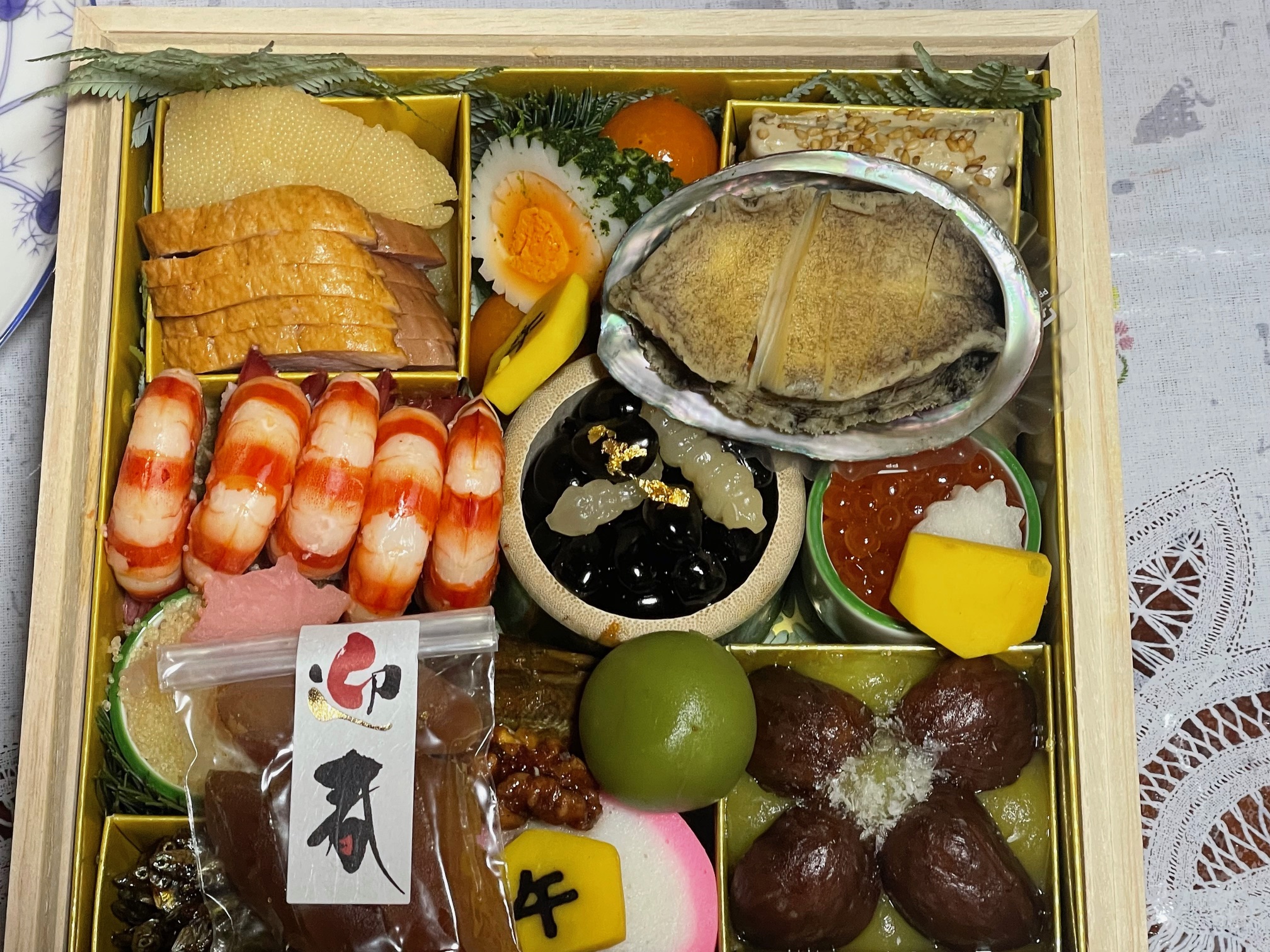
The traditional Japanese New Year dish, ‘osechi ryori’
日本新年的传统「年菜」
日本のお正月が終わって時間が経過してしまいましたが、日本のお正月伝統の食事、おせち料理を紹介します。このサイトに外国人の方も結構訪問されていますので。おせち料理は日本の縁起の良い食材を使うとともに彩、味にも拘った食になります。元旦にしか見れない貴重な食事になりますので、海外の方は是非、正月に日本に来て体験してください。今回、ご紹介するのは日本の老舗百貨店高島屋さんで販売されているおせち料理になります。
Though some time has passed since Japan’s New Year celebrations concluded, I’d like to introduce the traditional New Year feast known as osechi ryori. As this site is visited by quite a few international visitors, I thought it worthwhile. Osechi ryori features ingredients considered auspicious in Japan, with meticulous attention paid to both colour and flavour. It’s a precious meal only seen on New Year’s Day, so I urge those abroad to visit Japan during the New Year period to experience it. This time, I’ll be introducing the osechi ryori sold by Takashimaya, Japan’s long-established department store.
*** Translated with www.DeepL.com/Translator (free version) ***
虽然日本新年已过,但还是想为大家介绍日本传统的新年料理——御节料理。毕竟本网站也有不少外国访客。御节料理不仅选用象征吉祥的食材,更注重色彩搭配与风味层次。这是唯有元旦才能品尝到的珍贵美食,海外的朋友们请务必趁新年来日本体验一番。本次介绍的是日本老字号百货店高岛屋销售的御节料理。
まずは2段重ねのおせち料理。家族や親戚が集まって皆で楽しんでいただきます。
First, the two-tiered osechi ryori. Family and relatives gather to enjoy it together.
首先是两层叠放的年节菜肴。家人和亲戚们齐聚一堂,共同享用这顿美餐。
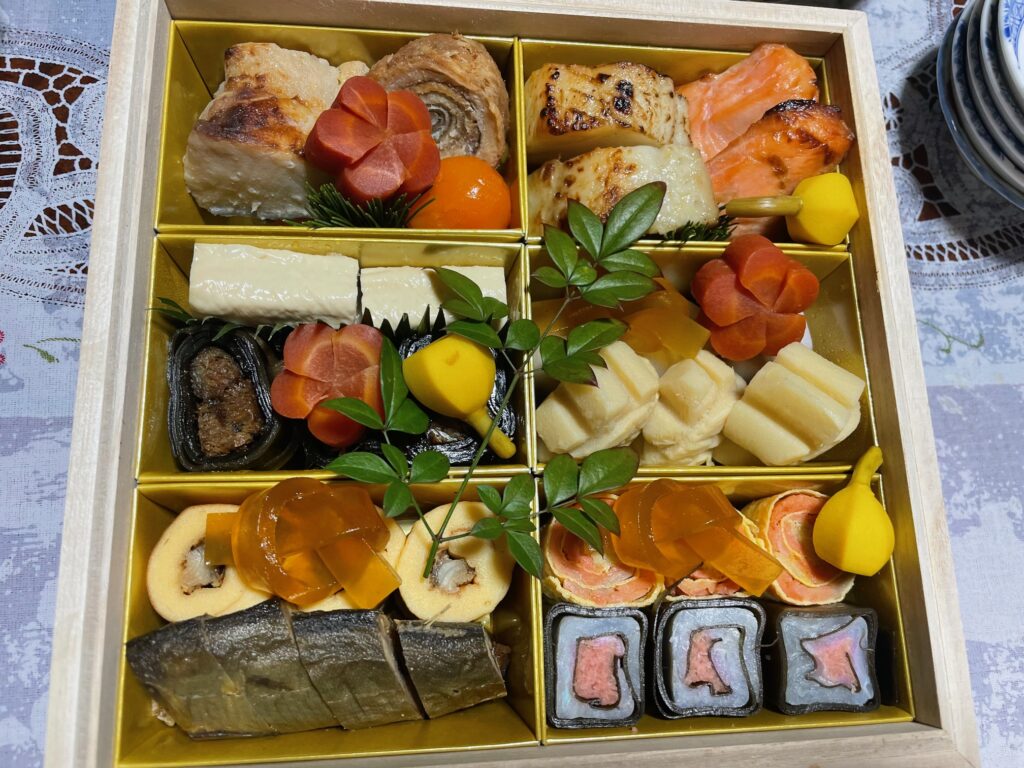
縁起物と言われている食材を集めて作っています。例えばカズノコ(2枚目写真左上)は「卵の数が多いことから子孫繁栄」、かまぼこ(2枚目写真下中央)は「紅白なのでおめでたい」、栗きんとん(2枚目写真右下)は「黄金色のなので金運」、エビ(2枚目写真左真ん中)は「腰が曲がるまで長生き」というようにいろんな意味合いが込められています。
This dish is made by gathering ingredients considered auspicious. For instance, kazunoko (top left in the second photo) symbolises “prosperous descendants” due to its many eggs; kamaboko (bottom centre in the second photo) is “auspicious” for its red and white colours; kuri kinton (bottom right in the second photo) represents “financial fortune” with its golden hue; and shrimp (middle left in the second photo) signifies “long life until one’s back bends”. Each ingredient carries its own special meaning.
*** Translated with www.DeepL.com/Translator (free version) ***
这道菜精选了被视为吉祥之物的食材制作而成。例如鱼子酱(第二张照片左上角)象征”子孙繁衍”,鱼糕(第二张照片下方中央)因红白配色寓意”喜庆吉祥”,栗子金团(第二张照片右下角)因金黄色泽代表”财运亨通”,虾仁(第二张照片左中)则寓意”健康长寿直至腰弯”,每样食材都蕴含着独特的吉祥寓意。
次にご紹介するのは日本の四季を現したかわいい4段重ねのおせち料理です。
Next, we present a charming four-tiered osechi dish representing Japan’s four seasons.
接下来要介绍的是展现日本四季风情的可爱四层叠式年菜。
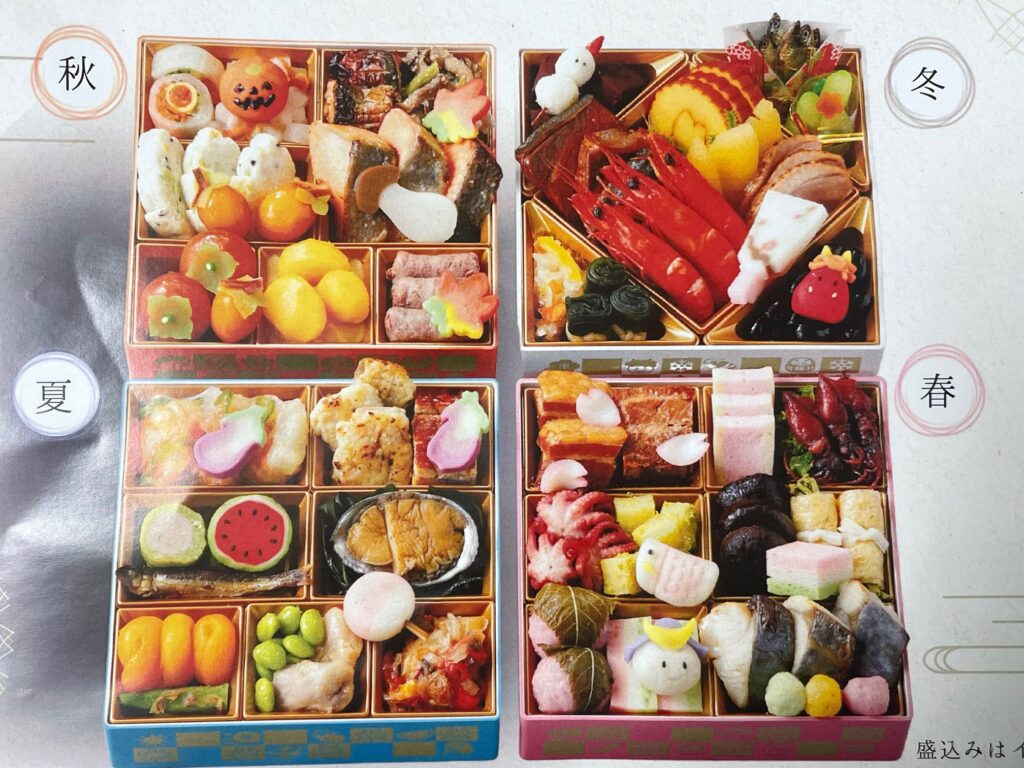
右下が春で桜色の食材を使い、花の季節や子供の節句を表しています。左下はスイカや海産物で夏のイメージ、左上はハロウイーン、柿、紅葉で秋、右上はお正月を表現した冬のイメージになっています。なんとなく可愛い雰囲気で子供にも人気ですね。
The bottom right features spring, using cherry blossom-coloured ingredients to represent the season of flowers and children’s festivals. The bottom left evokes summer with watermelon and seafood, the top left depicts autumn with Halloween, persimmons, and autumn leaves, while the top right presents a winter scene representing New Year. Its somewhat cute atmosphere makes it popular with children too.
*** Translated with www.DeepL.com/Translator (free version) ***
右下角以春为主题,使用樱花色食材,象征花季与儿童节。左下角以西瓜和海产呈现夏日意象,左上角通过万圣节、柿子与红叶表现秋意,右上角则以新年元素展现冬日氛围。整体洋溢着可爱气息,深受孩子们喜爱呢。
最後にご紹介は効率的で無駄のない一人用に分けられたおせち料理です。
Lastly, we present an efficient and waste-free osechi set portioned for one person.
最后要介绍的是专为一人份设计的节庆料理,既高效又毫无浪费。

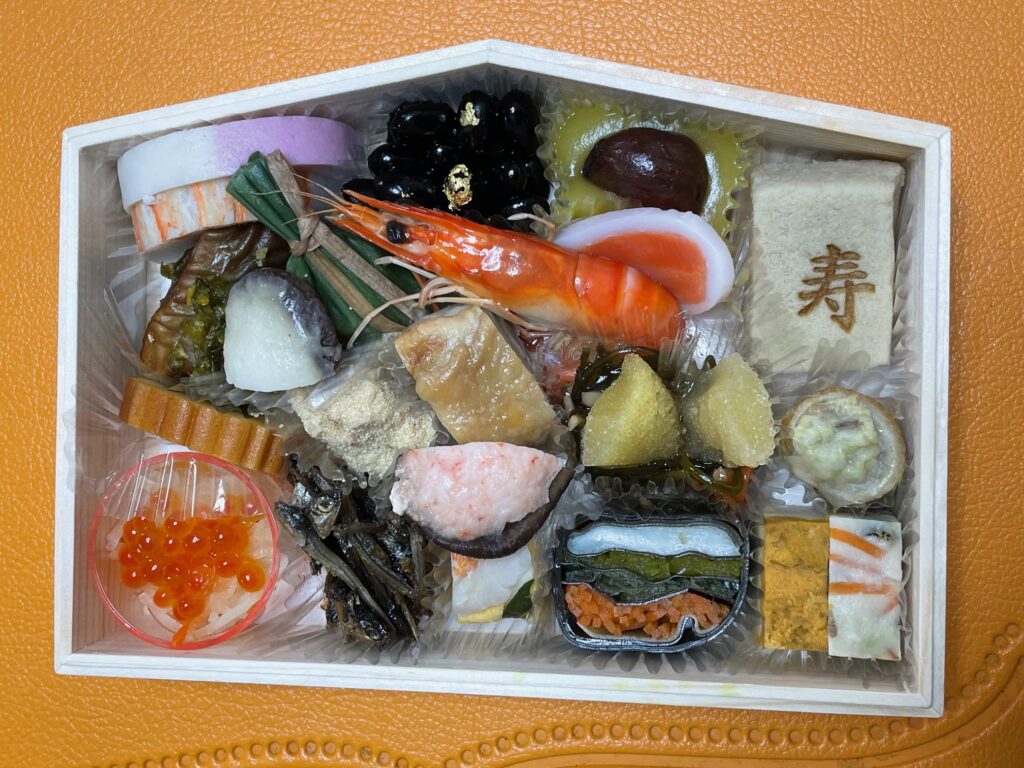
従来のおせち料理は一つの箱の中に入った料理を皆で食べるものでしたが、お互いに遠慮したりで気を遣うものでした。また、大家族だった時代のもので食べ残しが出てしまったりしてました。一人用では自分の食べる箱が決まっているので気を使わなくて済みます。大家族ではなくなった日本では無駄もなくなり、効率的な内容になっています。
Traditional osechi dishes were served in a single box for everyone to share, which often involved mutual deference and careful consideration. Moreover, as they were designed for large families, leftovers were common. With individual portions, each person has their own box, eliminating the need for such consideration. In modern Japan, where large families are less common, this approach reduces waste and offers a more efficient arrangement.
*** Translated with www.DeepL.com/Translator (free version) ***
传统的年菜是将所有菜肴装在一个盒子里供大家共享,但人们常因互相顾虑而拘谨。此外,这种形式源于大家庭时代,常导致食物剩余。而单人份年菜因每人拥有固定餐盒,无需顾虑他人。在已非大家庭结构的日本,这种形式既避免了浪费,又实现了高效的菜品配置。
海外でご覧になられている方、お正月には日本に来て伝統料理のおせち料理を目で見て、下で味わってみてください。ただし、事前の予約が必要なのでご注意を!
For those viewing from overseas, why not come to Japan over the New Year period to see traditional osechi cuisine with your own eyes and savour it for yourself? Please note, however, that advance booking is essential!
在海外观看的各位,新年期间请务必来日本亲眼看看传统料理御节料理,再亲自品尝一番。不过请注意,需要提前预约哦!
コメント
よく考えちゃう、あなたみたいな絶景見たい。やる気もらえます!。 [url=https://iqvel.com/ja/a/%E3%83%99%E3%83%AB%E3%82%AE%E3%83%BC/%E3%83%96%E3%83%AB%E3%83%BC%E3%82%B8%E3%83%A5%E3%81%AE%E3%83%AC%E3%83%BC%E3%82%B9%E5%8D%9A%E7%89%A9%E9%A4%A8]歴史展示[/url] フォト&トレックログ 現地気分感じる — 超分かりやすい。